


Urban Shihemi , January 20, 2026
The high cost of election campaigns and persistent sexual harassment emerged as key barriers locking women out of leadership during a Vice Presidential debate hosted by the Federation of Women Lawyers in Kenya (FIDA Kenya) ahead of the Law Society of Kenya (LSK) 2026–2028 Council elections.
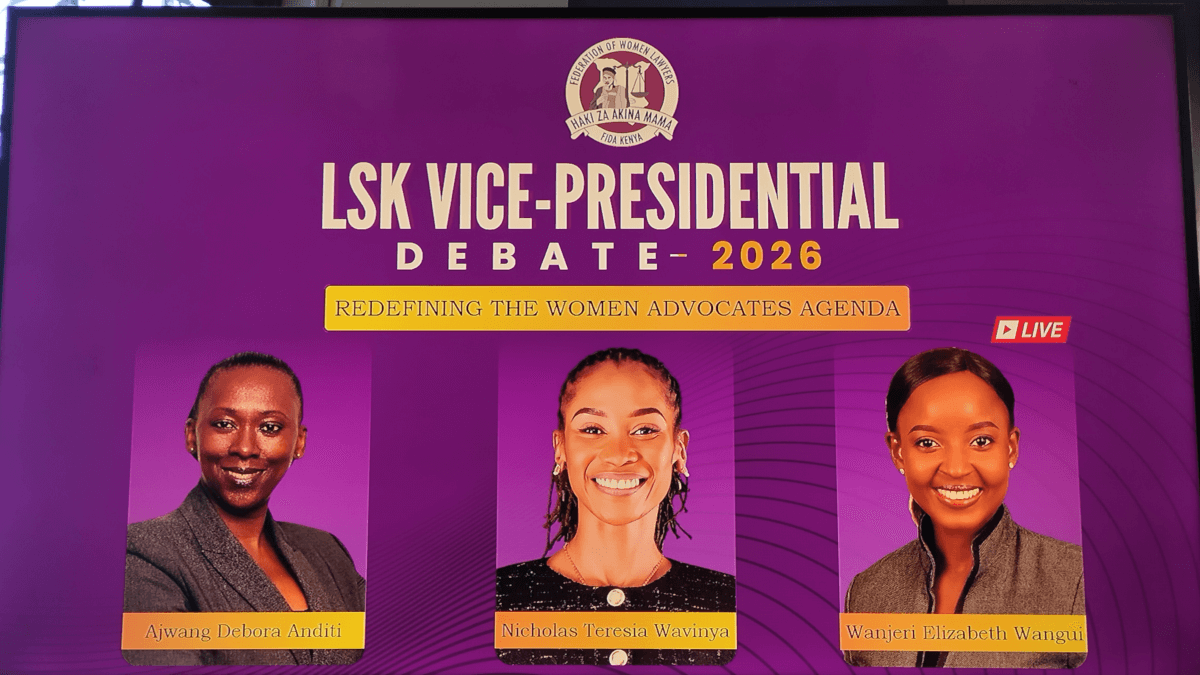
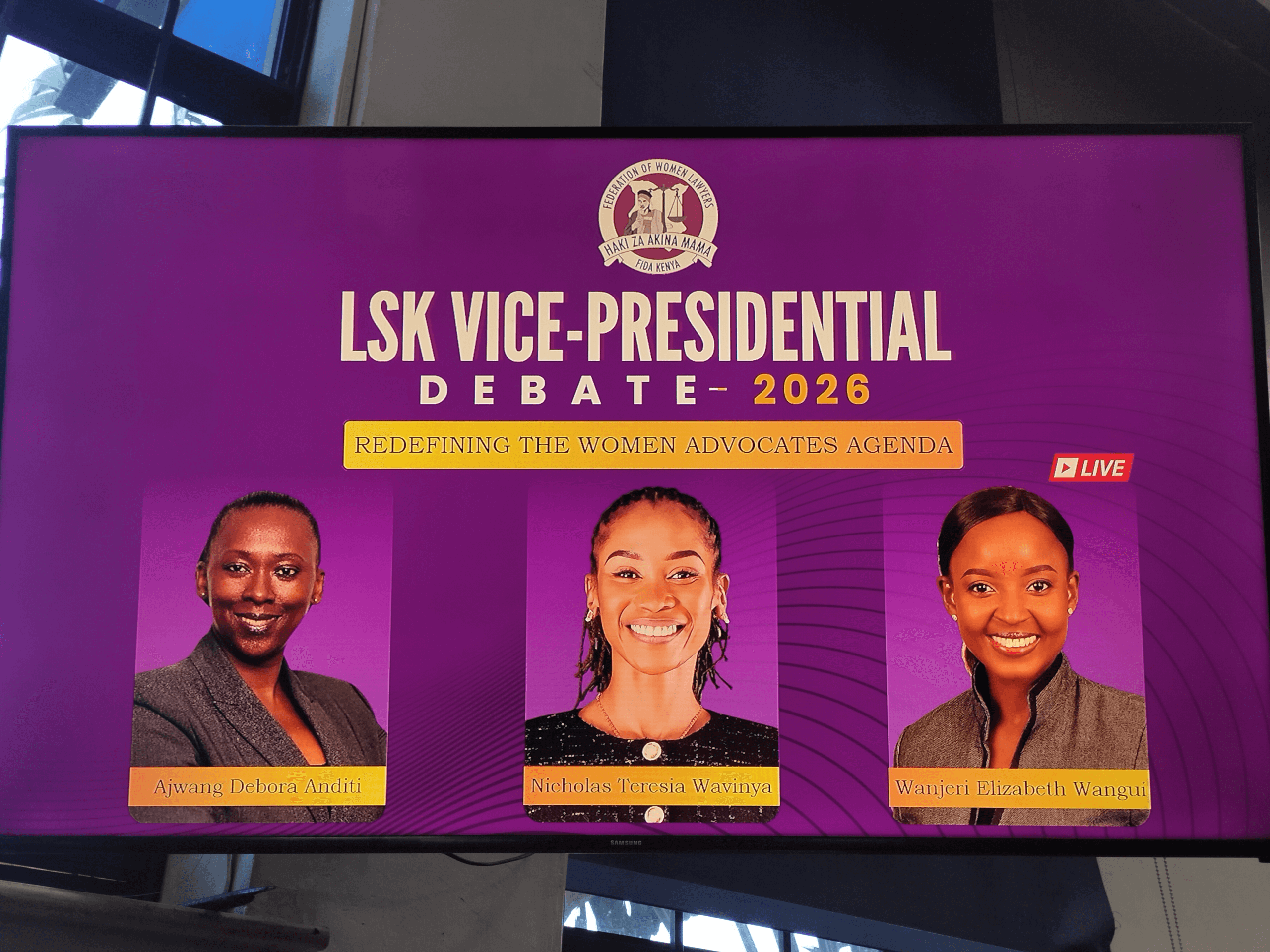
The debate, held in Nairobi, brought together three Vice Presidential contestants Debora Ajwang Anditi, Nicholas Teresia Wavinya, and Wanjeri Elizabeth Wangui.
The forum opened with a pointed question on the practical application of feminist leadership, where the candidates jointly called out the slow and ineffective implementation of the 2019 Sexual Harassment and Anti-Bullying Policy.
They argued that without enforcement, policies remain symbolic and fail to protect women within the profession.
Designed as a platform to amplify women’s leadership, the debate focused on promoting gender-responsive policies, inclusive economic opportunities, and the urgent need to eliminate gender-based violence (GBV) in professional spaces.
A dominant issue emerging from the discussion was the prohibitive cost of campaigns, which all three contestants agreed has significantly contributed to the low number of women ascending to leadership positions within professional bodies such as the LSK.
“Campaign financing remains a serious structural barrier that disadvantages women,” Nicholas Teresia Wavinya noted, warning that without reforms, leadership will continue to favour those with access to financial networks.
She also pointed to sexual harassment and victimization as deeply entrenched challenges that continue to silence and discourage women from offering themselves for leadership.
“Hostile environments, fear of retaliation, and the lack of effective protection mechanisms have pushed many women out of leadership spaces,” Wavinya said, adding that the failure to fully operationalize the 2019 policy has worsened the situation.
Addressing broader inclusivity concerns, Wanjeri Elizabeth Wangui called for deliberate affirmative action for persons with disabilities (PWDs), proposing the creation of special seats and targeted policies within LSK leadership structures.
“Inclusivity must go beyond gender,” Wangui said. “We need affirmative action for persons with disabilities to ensure leadership reflects the diversity of our society.”
On mentorship and leadership development, Debora Ajwang Anditi challenged the legal profession to confront its failure to nurture future leaders.
“We cannot keep asking why young women are not rising when we have not created structured mentorship pathways for them,” Ajwang said, calling for intentional programs to guide young and upcoming lawyers into leadership.
The debate also turned to the credibility and independence of the Law Society of Kenya, particularly in its role as a watchdog against government excesses. Wavinya insisted that LSK must act “without fear or favour” when defending the rule of law. Wangui acknowledged that institutional limitations and lack of support remain a challenge but emphasized the need to work collaboratively with other institutions. Ajwang urged unity, stating that “we must speak with one voice as a society” to confront governance failures and protect constitutional values.
As the LSK 2026–2028 Council elections draw closer, the issues raised during the debate are expected to shape conversations around reform, integrity, and gender equity not only within the Law Society, but across Kenya’s broader professional landscape.The three aspirants are members of Fida Kenya.
